Gaskets & Seals Silicone and rubber, made in Howrah since 1984
A gasket is small cost in your BOM but can often be the point of failure if not done right. We make gaskets and seals for manufacturers who need their product to stay sealed for decades in service.
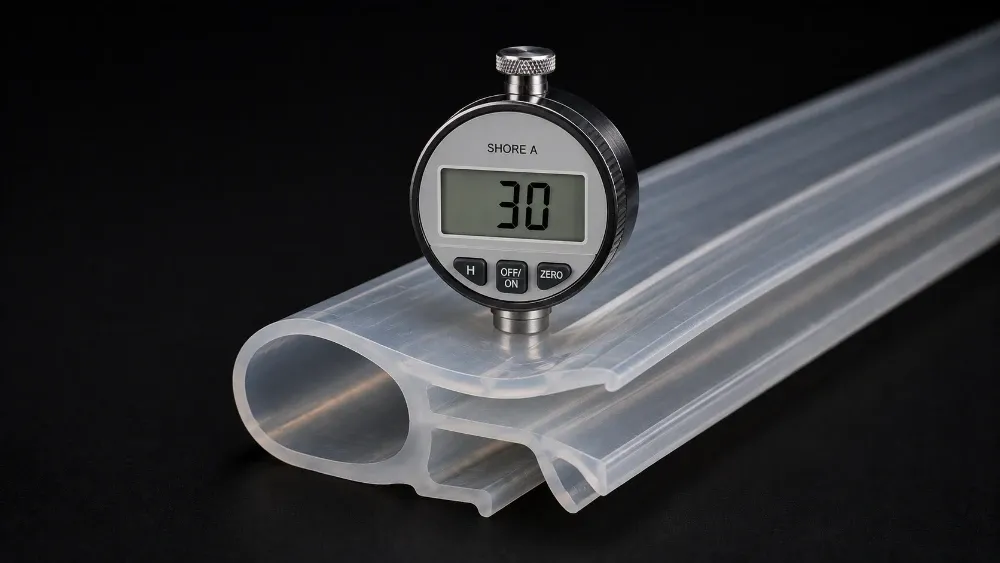
Luminaires, dehumidifiers and industrial products
Our gaskets go to luminaire makers, industrial dehumidifier makers and makers of industrial products: anyone who needs their product to be in service for a long time.
They usually switch to us for one of two reasons.
Their gaskets passed with the enclosure in the first batch, then stopped sealing in the second or third, because someone in the compounding bay was not careful enough or the supplier was not holding its quality. We check every batch of compound before it goes near the extruder, so the hundredth delivery behaves like the first.
Their volumes grew and the old supplier could not make enough, fast enough. On a simple profile our lines can run about 12,000 metres a day. On a heavy, complicated one it can be 300.
Three reasons a gasket leaks
When a customer brings us a gasket that has failed, the cause is nearly always one of these.
The gasket takes a permanent set, stops springing back and stops sealing.
The section, the groove or the clamping is wrong for the job. Often the gasket is being squeezed much harder than it was designed for.
The sample passed. The production lots that followed were not made the same way.
A gasket is a small line on the bill of materials. When it fails, what you pay for is the warranty claim, and warranty claims are not cheap. Save on the gasket and you can pay on the warranty. Spending on good quality gaskets is a wise investment.
Four or five rounds of samples failed. The fix made the gasket 15% cheaper.
In 2019 a leading luminaire manufacturer from India had a serious water ingress problem. They had been through four or five rounds of samples, some of them ours and some from other suppliers, and none of them worked.
Their engineer was not convinced we could help. Abhishek flew down to look at the design and the gasket himself. The problem was the clamping. The clamping pressure was so high that the gasket was being squeezed far past what it could take, and it was getting cut at random points as the housing closed.
The fix was a simple design change: we made the hollow in the section bigger. The gasket compressed the way it was meant to and the leaking stopped. Because the new section used less rubber, it also came out about 15% cheaper than the one they had designed. It is still in production for them today.
How we keep the hundredth batch like the first
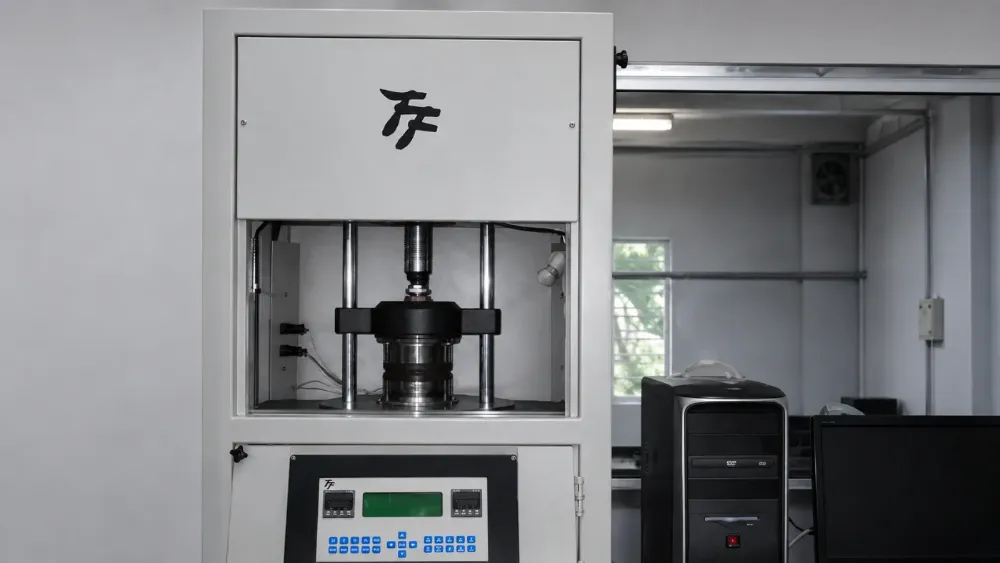
Every batch of compound is checked for hardness, cure and porosity before it is used. A batch that has not been checked does not go to the extruder.
Our lab also tests tensile strength, compression set, abrasion, heat ageing and ash content in-house, so we are not waiting on an outside lab to find out whether something has changed.
We make our own 3D models and our own moulds, so we do not cut corners there either. Before a mould goes into production, someone checks every cavity. On a 36-cavity mould, that means all 36.
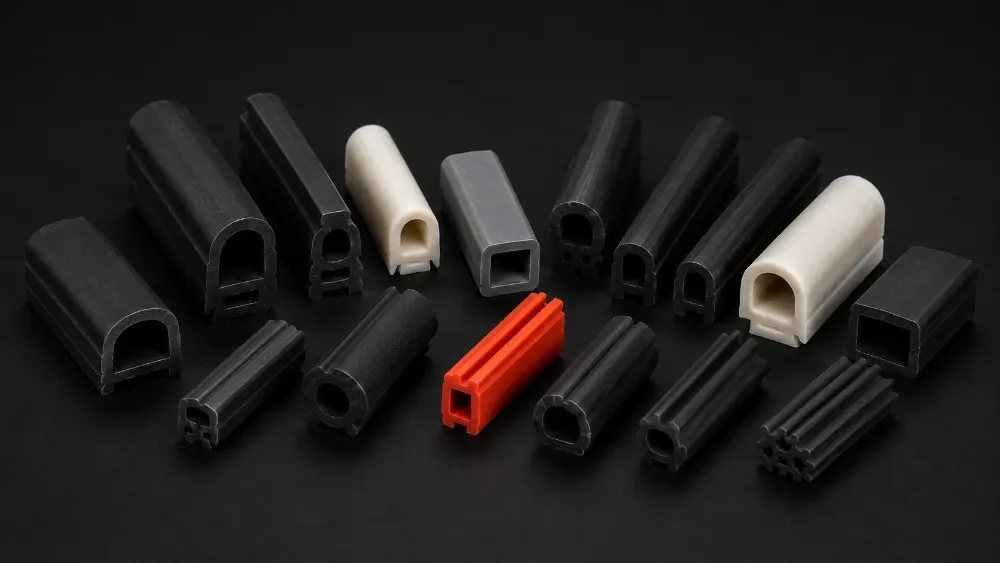
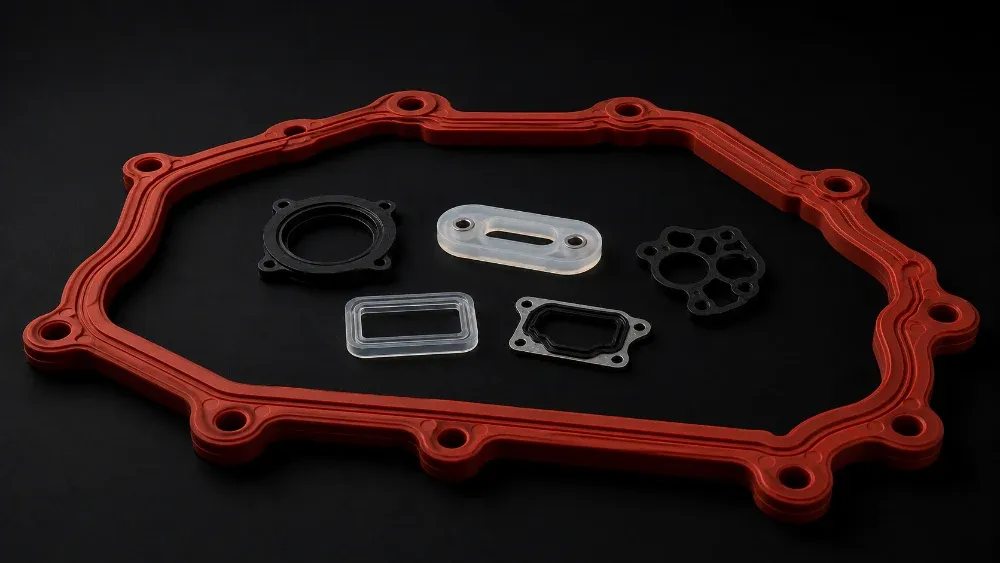
Which kind of gasket do you need?
The right route depends on the size, the shape, how critical the seal is and what you want to spend. If you are not sure, send the drawing and we will tell you.
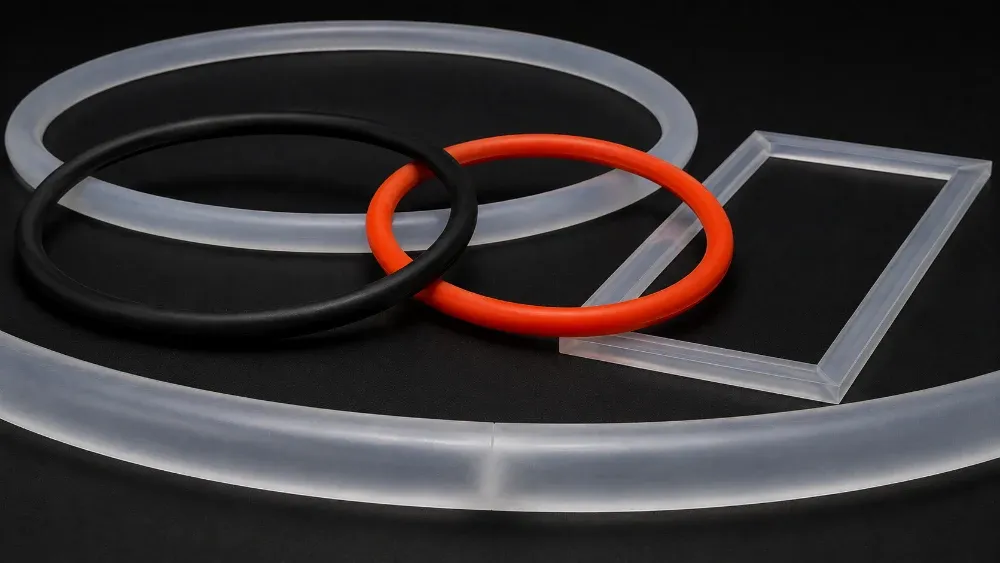
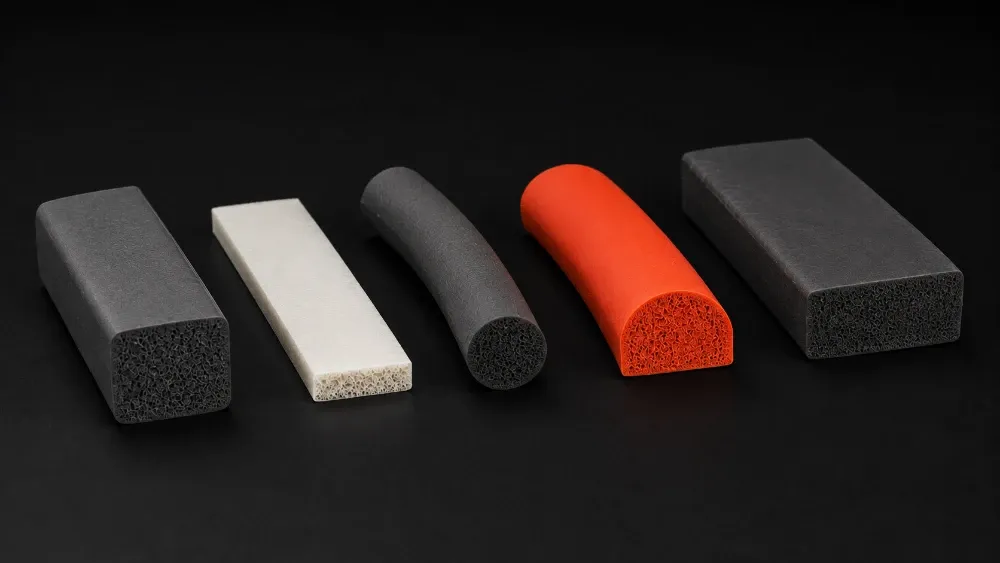
Looking for other seals? See rubber washers, O-rings and grommets.
Small orders are possible. Tooling is the catch.
We try to take small quantities. The limit is tooling. An extrusion die or a mould has to be designed and machined, and that cost comes to the customer. We can make you five pieces. They will not be cheap.
- Extrusion die
- Ready in 2 to 3 days
- Moulding tool
- Ready within 7 days
- Where tooling is made
- Designed and machined in our own toolroom
- Lead time
- Committed when we take your order
Tooling cost depends on the part, and we quote it with your enquiry.
Lead times : we give you a date when we take the order and we keep to it. If something slips, whether it is dispatch or a hold at QC, we tell you before you have to ask.
Gaskets and seals
Yes. We extrude silicone and EPDM, and we mould silicone, EPDM, NBR, FKM, neoprene and other polymers.
Send us the gasket that is giving you trouble
Send a drawing, a sample or a photo of how it is fitted. We will tell you what we think is going wrong and what we would make instead.