The geometry decides the process, and the process decides what you pay for tooling. All three are made here.
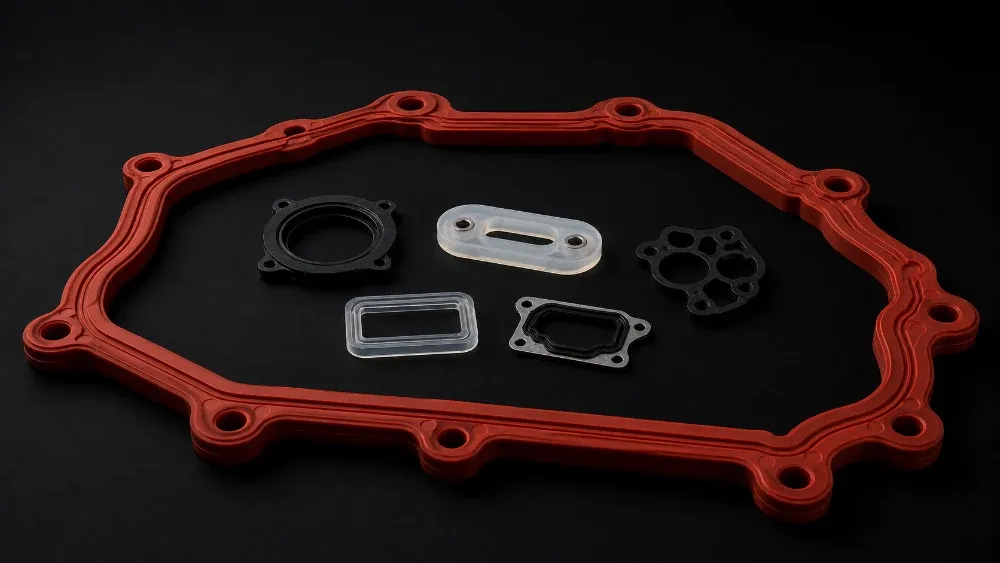
Moulded silicone gaskets
Cured under heat and pressure in hydraulic presses, 20 to 90 Shore A. The right answer for three-dimensional geometry, sealing beads, moulded-in holes and tight tolerances at volume. Tooling is designed and cut in our own CNC toolroom.
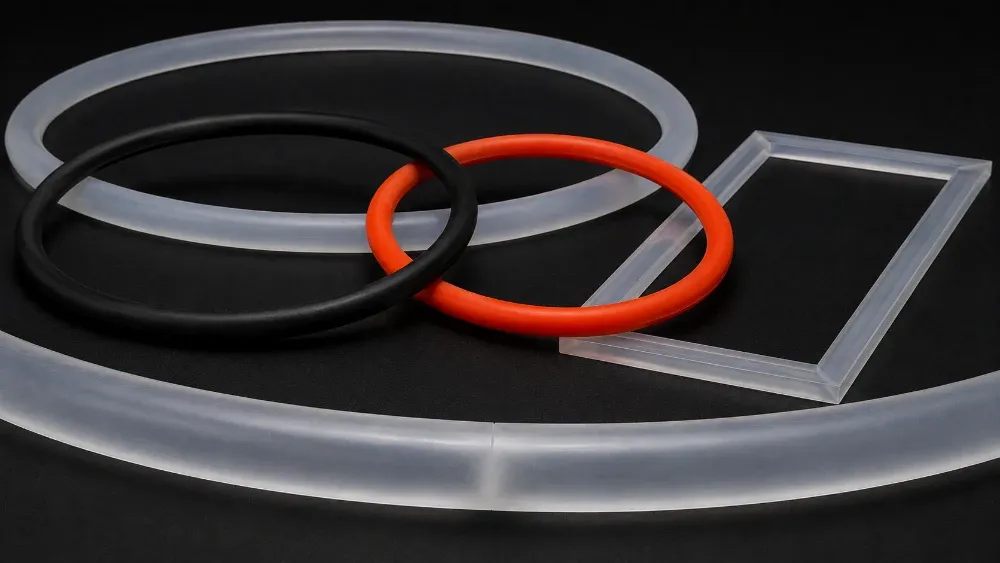
Joined endless gaskets
An extruded section vulcanised end to end into a closed loop, with no glue line and no step at the joint. Large perimeters become possible without a mould. Mitred 45-degree corner joints for rectangular frame gaskets that must hold their shape.
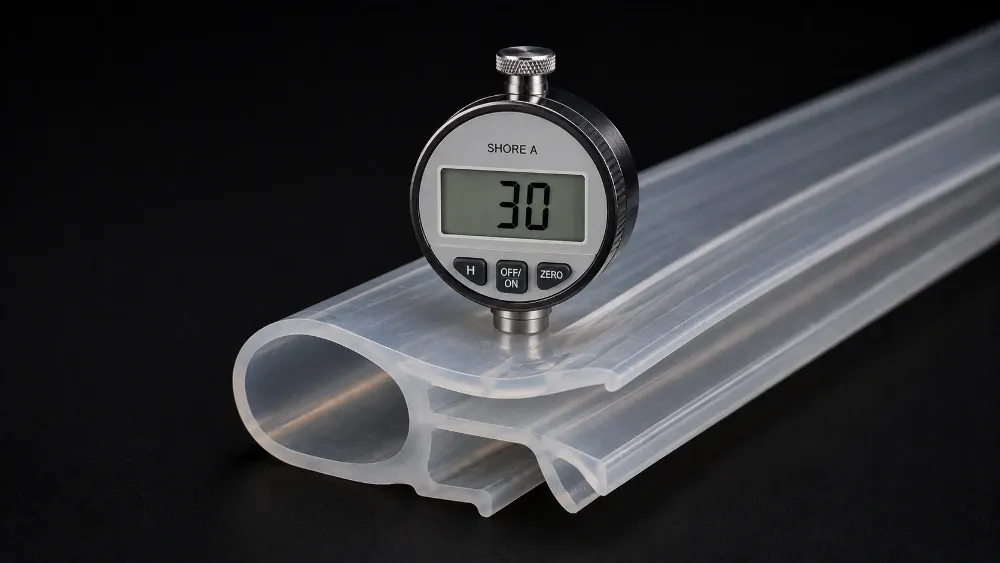
Extruded profile gaskets
Continuously vulcanised to a constant cross-section and cut to length. Thousands of dies on hand, new dies cut in days. Down to 30 Shore A where the closure force is low. More on silicone extrusion.
Why silicone
What the compound buys you
−60°C to +225°C
Continuous service across the full span, with no meaningful hardening at the top of it. This is where silicone displaces neoprene and NBR: inside a luminaire or a housing, heat hardens those compounds years early, and a gasket that has hardened no longer springs back.
It barely ages outdoors
Sun, ozone and heat cycling do very little to silicone. A silicone gasket usually outlives the enclosure it sits in, which is the difference between a warranty you honour and a warranty you fund.
Compliant grades
FDA 21 CFR 177.2600, BfR XV, USP Class VI chapters 87 and 88, and BS 6920 for potable water. Compliance documents travel with every dispatch.
Sealing to IP68
Groove fill, compression set and creep are engineered before the tooling is cut, so IP66, IP67 and IP68 hold in service rather than only in the type test.
Silicone is not always the right answer. If the part will sit in oil or fuel, NBR or FKM will outlast it, and for an outdoor seal that never sees high heat, a moulded EPDM gasket does the same job for less. We make those too. The materials guide compares all six base polymers side by side.
From enquiry to first article
What we need from you
A drawing, a 3D model (STEP, IGES, Parasolid, DXF or PDF), a sample, or a description of the conditions the part has to survive. If the original is an imported part no longer available, send the worn one and we reverse engineer it.
Compound is mixed in-house from over 800 formulations, the cure curve of every batch is plotted on a rheometer, and finished gaskets are inspected dimensionally against IS, BS and ASTM methods before dispatch. The full sequence is on the process page.
Have a question?
Silicone gasket questions
A VMQ silicone gasket works continuously from −60°C to +225°C. That span is the usual reason a silicone gasket replaces a neoprene or NBR one: heat inside an enclosure hardens those compounds years ahead of schedule, and a hardened gasket does not spring back.
An extruded silicone gasket can land cheaper than a moulded one. A moulded gasket needs a mould and you pay for it. An extrusion die costs a fraction of that and is cut in our own toolroom in days. Joined into an endless loop, an extruded gasket covers any perimeter with no mould cost at all. Moulding wins on complex three-dimensional geometry and tight tolerances at volume.
Moulded gaskets run 20 to 90 Shore A. Extruded sections go down to 30 Shore A in silicone, held to section on the continuous vulcanizing line where soft compounds normally slump. Low hardness matters where a thin lid or lightweight door has to close and seal under low closure force.
Yes, in the relevant grades: FDA 21 CFR 177.2600, BfR XV, USP Class VI (chapters 87 and 88) and BS 6920 (WRAS). Compliance documents travel with every dispatch.
Yes, and we engineer for the rating rather than simply quote it. Groove fill, compression set and creep are worked out before the tooling is cut, so the rating survives years in service and not just the type test. Proven in lighting, electronics and electrical fittings.
A single prototype through to a million pieces. First articles can be produced from a drawing, a 3D model, a sketch, or an existing worn sample to be reverse engineered.
Send us a gasket to quote
Provide a drawing, a sample, or a description of the problem. We respond with a material recommendation, a price and a lead time.